
 marks FREE genealogy records.
|
| Your link to the past since February 1996! Search for your ancestors in free Ships' Passenger lists, Naturalization Records, Palatine Genealogy, Canadian Genealogy, American Genealogy, Native American Genealogy, Huguenots, Mennonites, Almshouse Records, Orphan Records, church records, military muster rolls, census records, land records and more. marks FREE genealogy records. |
|
Follow Olive Tree Genealogy
Olive Tree Genealogy was chosen by Family Tree Magazine as one of the 101 Best Genealogy Websites 2017! Check out the Genealogy Books written by Olive Tree Genealogy! |
  Death Finds a Way: A Janie Riley Mystery by Lorine McGinnis Schulze
Janie Riley is an avid genealogist with a habit of stumbling on to dead bodies. She and her husband head to Salt Lake City Utah to research Janie's elusive 4th great-grandmother. But her search into the past leads her to a dark secret. Can she solve the mysteries of the past and the present before disaster strikes? Available now on Amazon.com and and Amazon.ca |
 Organize Your Genealogy in Evernote in 10 Easy Steps is a must have!
|
|
Try an Ancestry.com Free Trial and Ancestry.ca Free Trial Genealogy Mystery Book!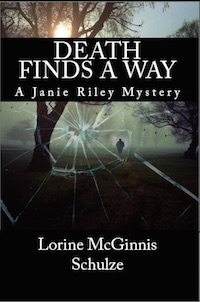 Death Finds a Way: A Janie Riley Mystery by Lorine McGinnis Schulze Janie Riley is an avid genealogist with a habit of stumbling on to dead bodies. She and her husband head to Salt Lake City Utah to research Janie's elusive 4th great-grandmother. But her search into the past leads her to a dark secret. Can she solve the mysteries of the past and the present before disaster strikes? Available now on Amazon.com and Amazon.ca Genealogy NewsletterJOIN the FREE Olive Tree Genealogy Newsletter. Be the first to know of genealogy events and freebies. Find out when new genealogy databases are put online. Get tips for finding your elusive brick-wall ancestor.
Share With OthersShare with other genealogists! Tweet this page! Tweet
Search OliveTreeGenealogy
Search Fold3 |
New Netherland, New York Genealogy
Life in 16th and 17th Century Amsterdam Holland: EducationEducation in Amsterdam© Cor SnabelIn the Middle Ages Amsterdam had only one school, the Latin School, where the sons of the rich were prepared for university. They started at the age of six and they learned about Latin grammar, dialectics, rhetoric and Roman authors like Cicero and Virgilius. After eight years they were ready for university, but since the Netherlands did not have their own university, they had to go to Leuven, Paris or even further away. Amsterdam became a trading center and the parents found out their children were far better off learning arithmetic, bookkeeping and speaking foreign languages, than quoting Virgilius. Some enterprising men started private schools in 1503, but also these schools were for the rich only. In 1575 William of Orange appointed Leiden as the first University City and the graduates from the Latin School did not have to travel abroad anymore. In about 1620 disturbing rumors reached Amsterdam. A lot of sons of Amsterdam merchants studying in Leiden did not fit in, probably due to a lack of intellectual substance. Lectures were all in Latin, so passing the Latin School in Amsterdam just because your father was an influential man, made them fail in Leiden. In order to protect the name of Amsterdam the City Council hired two respected professors, Gerardus Johannes Vossius and Caspar Barleus, and founded their own university. After several protests of the Leiden University (they needed the Amsterdam money) the Prince of Orange and the High Council decided Amsterdam was not allowed to have its own university, but it was called Atheneum Illustre. Money never was an issue in this school, they hired famous scientists and even Leiden University had to admit, they could compete with any university in Europe as far as lecturers were concerned. But doctoral degrees could only be obtained in Leiden till 1877, when the Atheneum was promoted to University of Amsterdam. The Reformation had enormous consequences, even for the schools. The teachers of the Latin School, Pieter van Afferden and Simon Sonnius were replaced, because they refused to teach the new religion. Preferably the priests would have taken over education, but the City Council resisted against it with all its power. They appointed a board of governors, which had to supervise all schools and those who wanted to start a school. Professional knowledge was not priority number one; the new teacher had to be a “true believer” and was not allowed to use the “popish” books. The Reformed Church was the first to start educating the poor and the underprivileged. In 1657 an enormous Orphanage opened its doors for hundreds of poor orphans and two teachers welcomed them. One teacher for the girls, to teach them to pray, to spell, to read, to knit and to sew. And one for the boys, to teach them the principles of the only true Reformed Religion, to read and to write and to prepare them in learning a trade. These teachers did not only teach, they had to get up at six and supervise the children getting dressed and have breakfast, he or she had to clean the toilets, assist at evening prayer and get all these children in bed again. So it’s obvious it needed a strong character and a lot of discipline to keep control over these children. But the Reformed Church did take care of the other children too. It was a thorn in the flesh of the Church Council, that parents allowed their children to hang around in the streets all day and they decided to start schools for the poor. In these schools they could learn about discipline, obedience, submission and diligence. In order to get these children to school, they told the parents, who did not send their child to school or who forced their children to work, their names would be erased from the charity lists. Most of the lessons were filled with learned the Lord’s Prayer, the Ten Commentmens, the Twelve Articles, the Heidelbergs Catechism and other texts and proverbs. Only the first article of the school regulations was about education, the rest was about behavior and religion. The City Council shared the concern of the church, they were afraid the mob would assault the properties of the civilians if they were kept in ignorance for another generation. The poor never knew they lived in the Golden Age, but the new generation became aware of it and the only way to keep them calm was to let them in on it. So the City Council started founding public schools too, in order “to educate them, in spite their neglected upbringing, in godliness, virtuousness and diligence”. At the end of the 17th century Holland had the lowest percentage of analphabets in Europe. In 1968 the Amsterdam archivist S. Hart calculated, that in 1630 57% of the grooms and 32% of the brides were able to sign with their names. In 1680 these numbers were 70% and 44%, and in 1780 85% of the men and 64% of the women signed their marriage certificate.
|
URL: http://olivetreegenealogy.com/
All rights reserved
Copyright © 1996-present
Contact Lorine at |


